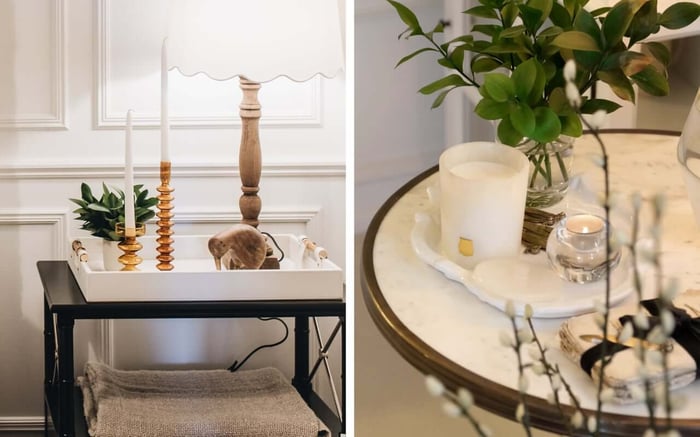

If there's one styling tip that instantly makes a space feel curated rather than cluttered, it's using decorative trays. A tray does more than corral decor; it also creates a defined "zone" for a mini vignette, one where you can apply our signature 5 Ls of Styling (Lighting, Layering, something Loved, something Living, and something with Lustre) on a small scale.
Below, we're sharing a few of our favourite ways to style a tray, each one built around the same simple approach: bring in all 5 Ls (either within the tray, or accounting for surrounding elements), principles such as the rule of three to choose your pieces, and layering for visual interest.
Before You Start: The Ground Rules
- Start with your largest piece first, then build the rest of the composition around it.
- Work in odd numbers. The rule of three says items arranged in odd formations are more visually appealing and interesting, encouraging the eye to move naturally between them. This is echoed in Feng Shui, where odd numbers are thought to expand and generate energy. Three pieces on a tray is the easiest way to start: a tall, a medium, and a low or textural piece.
- Vary the height, shape, and texture. Mix short, medium, and tall; cylindrical, straight, and irregular. This is what creates movement rather than a flat, static grouping.
- Leave a little breathing room. Even a small tray needs negative space to feel balanced rather than crowded.
A note on the 5 Ls and trays:
Our 5 Ls of Styling: Lighting, Layering, Something Loved, Something Living, Something with Lustre.
While we still want all 5 Ls present within a room, since a tray is small, not every element needs to live on the tray itself.
And if the tray sits within a larger vignette (on a console under a mirror or on a coffee table near a lamp), those nearby elements can carry the remaining elements for you. The goal isn't to cram all 5 onto the tray; it's to make sure all 5 are present in the moment, whether that's on the tray or just beside it. Shop Decor
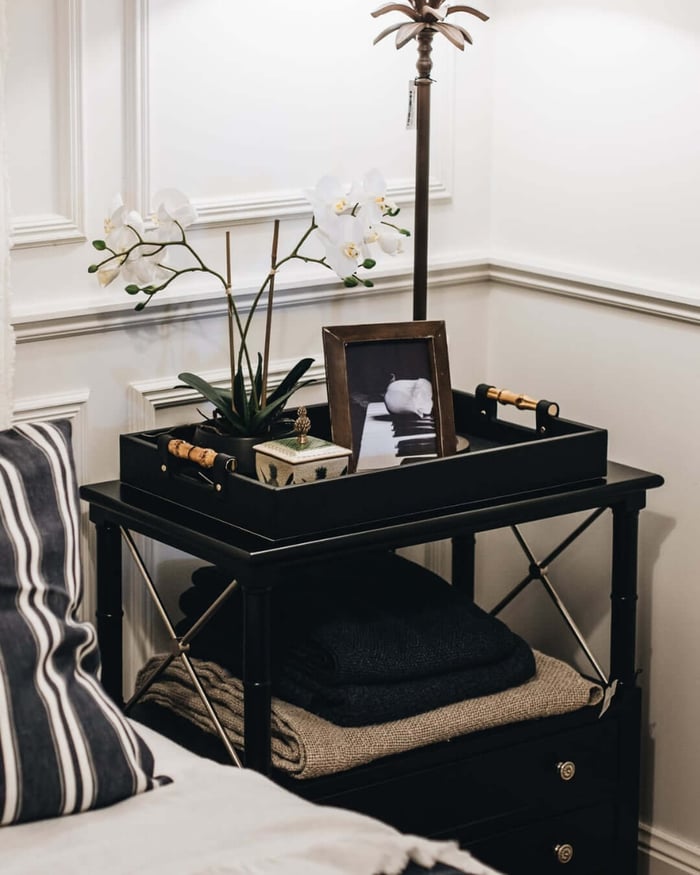 1: The Bedside Tray
- Layering: start with your largest item as the anchor; a sculptural candle, a beautiful diffuser, or bedside lamp, then build around it in a group of three, varying the height and shape.
- Loved: this could be as simple as your current book or a journal and pen, a stylish alarm clock, a leaning piece of art, or a trinket dish.
- Living: a single stem in a small vase, fresh ruscus, or a slipper orchid, is enough to bring life to a compact space.
- Lustre: a glass tealight votive, a decanter, a metallic photo frame, a glossy vase, or simply let the tray itself be a metallic finish like brass or pewter.
- Lighting: if there's a lamp already on the bedside table, that's your lighting L covered. Alternatively, introduce real or battery operated candlelight.
Try this combination: a small ceramic vase with a single stem + a stack of two or three books + a crystal ring dish, styled beside your bedside lamp or underneath a wall sconce.
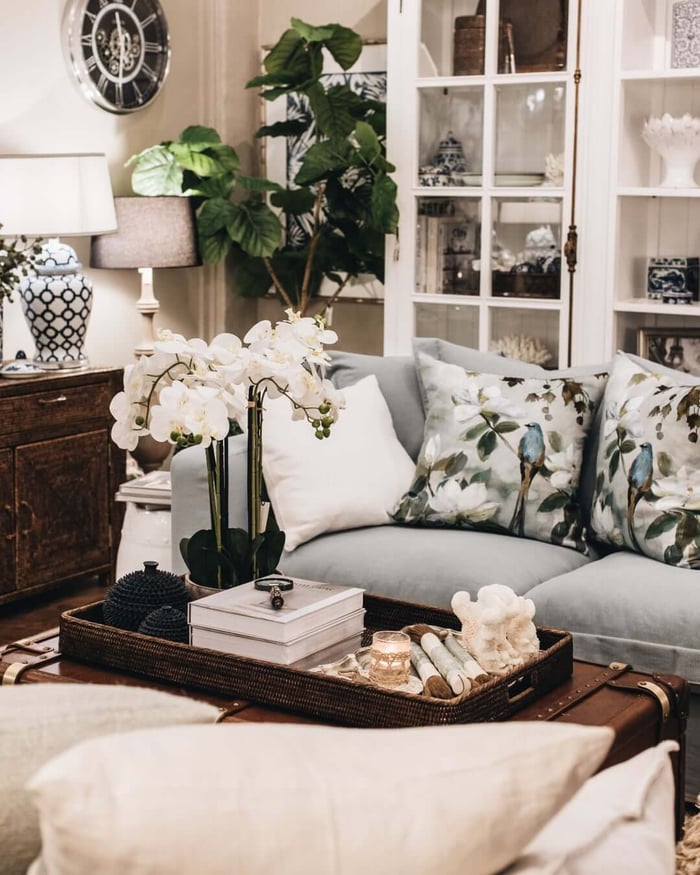
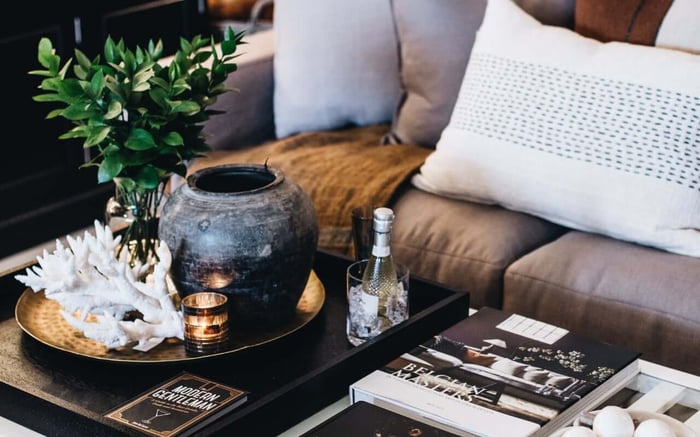
2: The Coffee Table Tray
Layering: make the tray itself your first layer of texture: rattan, metal, or marble all work well as a base, before layering in items of different heights, shapes, or scales.
Loved: draw upon items that reflect your personal style, the function of the space, and seasonal touches. This could be a chippy ceramic, a small object from your travels, board games, coffee table books, and depending on the season, a festive accent.
Living: a low vase of fresh ruscus or seasonal flowers brings freshness and vitality, and reflects the seasons.
Lustre: we often opt for a small glass or metallic candle holder, which is enough to catch the light without overpowering the natural textures around it.
Lighting: on a coffee table, this element usually comes from nearby rather than the tray, whether an overhead pendant, a nearby lamp, or, in the evening, a single lit candle or portable lamp placed on the tray itself.
For a more streamlined look, group similar items in varying heights and shapes instead. A collection of antique wooden candleholders or a curated collection, for example, layered amongst living energy.
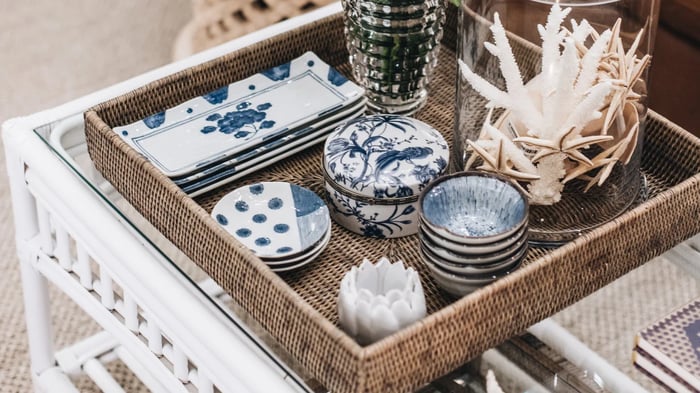
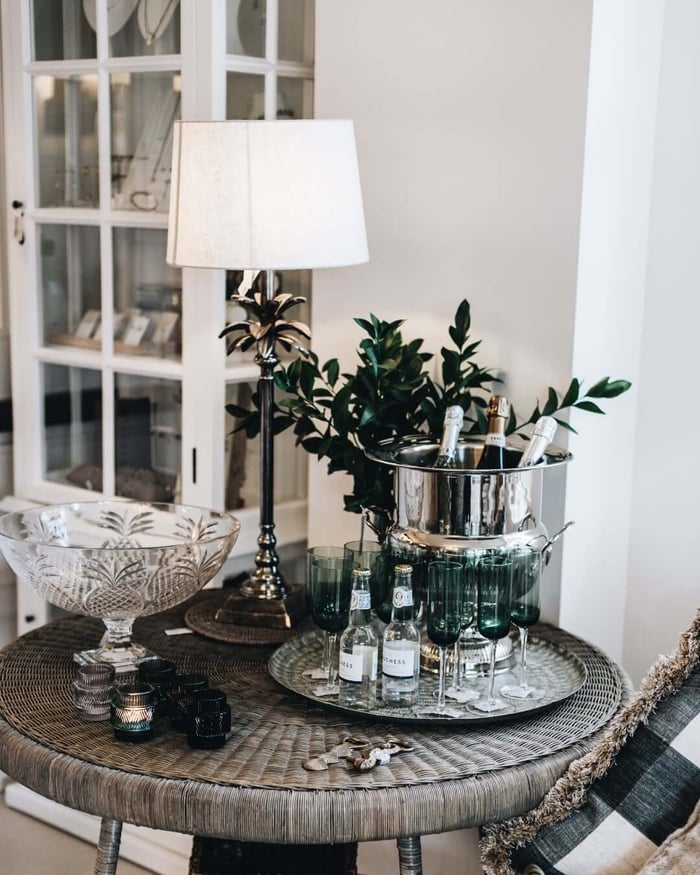
3: The Bar Cart or Console Tray
Layering: anchor with your largest piece: a decanter or champagne cooler, then build outward with your glassware, bar tools, and decor.
Loved: a monogrammed coaster set, stylish leather bar tools, and a vase or decorative bowl.
Living: a small sprig of fresh herbs, a citrus bowl, or a seasonal floral tucked in alongside the glassware.
Lustre: this is the tray where lustre can truly shine: crystal glassware, a mirrored tray base, or metallic barware.
Lighting: a nearby light fixture is often enough, especially as the lustre will help circulate it around the room, with the option of candlelight depending on the time of day.
Try this combination: a decanter + crystal glassware + a small dish of citrus or fresh herbs, with two or three tea light votives grouped to one side.
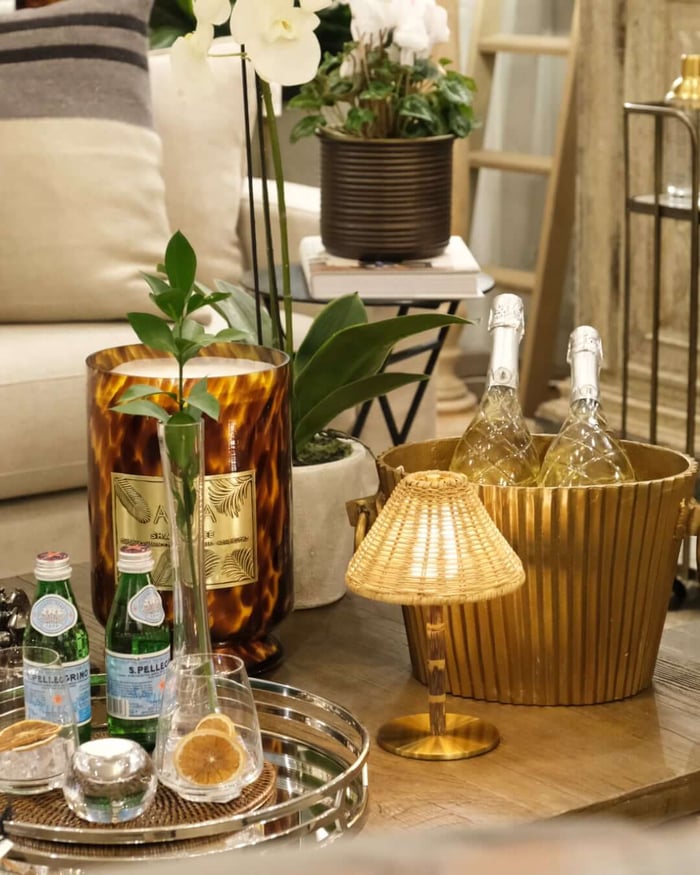
Bringing It All Together
Notice that in every example, all 5 Ls are present, but they don't all need to be big gestures, and they don't all need to sit right on the tray itself. A tea light is lustre. Fresh greenery is living. A lamp glowing nearby is lighting. Once you start zooming out and looking for the 5 Ls in this way, styling a tray becomes less about finding five different objects that meet this criteria, and more about noticing what's already within the zone, and filling in the missing elements, or enhancing the existing ones.
Start with one tray in your home this week: pick your largest piece, group in threes, and check off the 5 Ls, on the tray or around it. Feel free to share your look on Instagram, and tag our #5Lsofstyling and #suzieandersonhome so we can see your creations.
Want the full breakdown of the 5 Ls of Styling? Download our free 5 Ls Styling Ebook by signing up to our mailing list below.
Remember: when designing a home you love, the beauty is in the detail.